Showing posts with label Guest Post. Show all posts

Thursday, December 11, 2014

Guest Post: Lady Karola and the Christmas Stranger by Robin Maxwell

Lady Karola and the Christmas Stranger by Robin Maxwell

Lady Karola Kent was possessed of a foul mood and a growling belly as she stole ghostlike through the icy basement halls of Greenwich Palace. She was tired of being always hungry, her lady mother the Master Elf of Deprivation. “What man will take a fat cow for a wife? I’ll tell you. A poor one. And you, my girl, are bait for a high duke. Don’t you dare put that in your mouth.”

Of course the dancing at Elizabeth’s court to celebrate Christmas Eve earlier that night had been delightful, but it was the feast table that had surpassed Karola’s wildest imaginings. The peacock cooked and re-
dressed all in all its feathers, dozens of mince
pies, head cheese with mustard, a great pile of
oranges, melons and apricots, stuffed boars’
 heads at each end of the table, marchpane 
gilded with gold leaf, gingerbread, sugar-plated
walnuts, pitchers of hot mulled wine and
syllabub...and puddings of every sort – plum
 with hard sauce was her favorite – had swum before her eyes in a phantasm of color and 
aroma to enrapture the soul. She’d felt her
 mouth watering and though horrified, had had 
to bring three fingers to her carefully painted lips to hide the smile.

Once the queen had taken the first bite and waved her white, famously long-fingered hands at the festooned lords and ladies of her Christmas table Karola had reached for a thick bit of roasted duck - the dark meat of the thigh and crisped skin of its tender groin dripping with savory oils - when she felt a stinging rap at her wrist.

“Grosse vache!” came a gravely whispered French threat from her left.

“Mother, I am eating the duck.” Karola was used to the nagging and regularly defied it. “And I will have pudding.”

But before the meat had reached Karola’s lips she’d felt so vicious a pinch at her waist that she’d jumped sideways, very nearly unseating the Duke of Kenilworth on her right. There had been no choice there after. Make a scandalous scene or nibble on a pigeon’s wing all night. And no plum pudding.

From that moment she’d refused to speak to her mother who was altogether unperturbed by the ruin of her daughter’s evening. “What excitement!” she kept exclaiming as they returned with all the other single ladies to their rooms in the Greenwich’s east wing. The duke – a grieving widower of two weeks – had shown more than a seat-mate’s interest in Lady Karola’s company. Mother hadn’t been at all concerned that the “company” was the powdered skin of her daughter’s thigh. A marriage proposal was next. Now in their chamber as her mother unloosed the stiff stomacher Karola sagged, then gasped the first full breath of the evening. It was then she felt the gnawing in her belly and heard her stomach growling loudly.
“Good,” her mother said as she pulled her daughter’s nightgown over raised arms. “Just what I like to hear.”

By three bells Karola, though lying in the canopied dark within flannel and goose down, was shivering with hunger. She’d slipped snake like from the bed shared with her mother and on bare feet – with just a thin brown wool cloak for cover – hurried from the room with no one the wiser.

The corridors were blessedly empty. They’d been housed on the third level far from the queen’s rooms, so nary a guard was prowling these halls. She boldly lifted a torch from its sconce and held it before her, striding forward as though on an important royal mission. At each stairway she made her way down a flight of stone steps, these somehow colder on the tender skin of her feet than the rock slab corridors. The kitchen never seemed so far before! She thought. At this moment Lady Karola Kent knew she would risk her title, her very maidenhead for a decent meal.

In the dark basement she saw a dim light fanning softly out a wide archway. A few low voices and bursts of laughter floated to her ear on the powdery air. Of course. The bakers. They were first in the kitchen every morning. Bread for the whole court had to be made. They would all see her.

She didn’t care.

She strode single-mindedly through the archway and nodding politely to the white- aproned bakers – women at the tables with their fists sunk into yeasty dough and men shoving huge, heavy-handled trays of round loaves into the ovens. Karola knew her way around this long, narrow kitchen. All the queen’s waiting ladies did. She walked its length past a second arched doorway to the end where stood a wooden cabinet.

She gulped at the thought of its contents - leftovers of the day. Those last most succulent morsels of the night’s meal that had not been eaten at the tables or given as alms to the poor. These were called “The Pleasure of the Queen,” but Karol knew the title was ridiculous. The stick-thin queen has pleasures, she thought but they lay not with food. They “lay” elsewhere. The plates were therefore royal leftovers that were never eaten.

A waste, thought Karola who now placed her torch in an empty sconce and opened the double doors to reveal the shelves groaning with covered dishes. The covers could not disguise the fragrances wafting up around her head, making the tiny hairs in her nose stiffen in delight. Undaunted by the many pairs of bakers’ eyes that were certainly boring into her back Karola began to lift the covers one by one. The fish terrine, the spiced aspic, the boar’s tongue. The duck.

It was there, an entire half-bird lying flat on its cut side, the plump leg bursting through its skin. There, below the leg, Karola thought, was the thigh. There was no hesitation. She reached out and pulled off the leg. She was momentarily paralyzed, contemplating the operation necessary for separating the thigh from the duck’s torso. It would be messy. Greasy. Delicious.

“I like the thigh, too.”

Karola swiveled so violently towards the archway that the leg flew from her hand. Not a moment later the blind kitchen dog was snuffling his way towards the treasure. She was afraid to look up, even though the voice was decidedly not her mother’s. It was deep and melodious and hid a laugh behind
 every syllable. When she did glance 
up, feigning boredom to cover her
 mortification, she saw a sight that 
wholly unnerved her.

He was a Nordic man with a
 rectangular face, pale wiry mustache
 and a short, not-altogether-kempt
 beard. An unlit pipe jutted from 
between sensuous lips. He had, Karola
 was sure, the bluest eyes she had ever
seen, glinting with far too much light for this dim, flour-dusted kitchen. He wore an incongruous green wool jacket and breeches, all trimmed in ermine, and carried over one brawny shoulder a textile bag in a Mohammetan weave, looking too large and too heavy for a single man’s effort. It bulged in all directions with confounding angles and curves. What was in there? she wondered.

“Who are you?” she demanded instead, surprising herself again with a new found brazenness.

He didn’t answer. He simply regarded her with a steady eye. Karola opened her mouth to speak but closed it again. She had already gone too far in disgracing herself. She would wait, ladylike, for a reply.

“If I tell you my name,” he finally said in a soft growl Karola suddenly imagined she could easily come to love, “will you find me the plum pudding?”

She felt her bottom lip drop open and a little “uh” slip from her throat. She held his gaze which proved utterly disquieting. “All the plum pudding may be eaten. I haven’t found it yet.” Karola thought, but could not be sure, that she heard the green-suited man groan. She looked around her stealthily. “If I had,” she continued, “I would be eating it myself right now.”

“Go on then. Find it.”

He was giving her an order! As though he knew her. Why, this was no gentleman. He might be a new kind of fool in that suit, with the Turks bag. Yet she was compelled in a strange warm way to obey him. All he was asking for was a pudding.

Karola lifted one cover after another, coming up with delight after delight, but the man’s grunts of rejection drove her onward. On the bottom shelf was a tiny plate covered not with silver but an overturned bowl. She lifted it and her own gasp of pleasure elicited a whoop of joy from the man who was, all of a sudden, at her side.

But when they both looked down all joy fled. There was hardly a morsel left of the plum pudding. A mere dollop, though it was a drip with hard sauce.

“Here,” Karola said politely, “`tis yours. It was what you sought. What you asked for.”

Again he was silent. This was a man, she realized, who thought before he spoke, so unlike the courtly oafs she endured every day and whom – if her lady mother had her way – Karola would marry, bed and bear children for.

“I think you should eat it,” he finally said.

“If you don’t eat it, Karol replied, a rogue smile taking custody of her lips, “then you won’t be obliged to tell me your name.”

He considered that. “You wanted that plum pudding. You’ve been thinking about it all night.”

“How could you possibly know that?” she said, suddenly alarmed.

He smiled now, a slow graceful upward twirls of the lips revealing straight white teeth. “I know what is in peoples’ hearts,” he said.

She felt prickles on her arms under the brown cloak. What kind of thing was that to say? she thought.

“You’re cold,” he said simply, turning from her and the plate of plum pudding. He set his bag on the floor next to him and went rooting around in its largeness. She watched the long blonde hair swirling about his neck and shoulders and heard him muttering softly to himself, “I know you’re in there. Show yourself.”

Who on earth was he talking to? Karol thought. Was he a simpleton? A madman? Well, the bakers were still there at the other end of the kitchen.

“Ho! There you are!” she heard, and turned to see the man pulling from the sack a robe the likes of which Karola had never seen, nor ever imagined. It was woven haphazardly with strands of cloth of gold and the finest ribbons of white wool cloth and silk, even strips of cream nubby cotton like novice nuns wore. The inside, she could see now, was lined – like the trim of the green suit – in ermine.

“I think this will fit you,” he said and held it open wide.

It was a cloak fit for a queen, she thought. Well, mayhap a faerie queen. She turned her back to him and held her breath. Then a soft heaviness enveloped her shoulders and cradled her arms. She exhaled a too-emphatic sigh, but the pleasure of it was so great she was beyond caring.

Once she had repossessed herself Karol turned. She expected to find the stranger smiling delightedly down on her grateful expression. What she saw instead was the man depositing the single morsel of plum pudding between his fingers into his mouth. He held her eyes as he chewed, swallowed and sighed with unutterable contentment.

“Nicholas,” he finally said, licking his lips with unabashed gusto. “My name is Nicholas.”
~~~~~~~~~~~~~~~~~~~~~~~~~~~~~~~~~~~~~~~~~~~~~~~~~~~~~~~~~~~~~~~~~~~~~~~~~~~
Thank you Robin for the lovely short story just in time for the holidays. For more on Robin check out her new children's books TROUBLE IN TOYLAND and AUGIE APPLEBY'S WILD GOOSE CHASE. They would make excellent stocking stuffers for kids.
~L i z z i e~

Friday, November 11, 2011

Guest Post: Gillian Bagwell "Priest Holes"


Priest Holes by Gillian Bagwell

After Queen Elizabeth I succeeded her hated Catholic sister Mary Tudor, who had come to be known as Bloody Mary because of the hundreds of Protestants who were executed during her reign, mostly by burning at the stake, England became virulently anti-Papist, and practicing Catholic rites was outlawed. There was particular hostility toward and fear of priests, who suspected of rousing their followers to rise against the Protestant queen.

So an Act was passed prohibiting Catholics from practicing the rites of their religion on pain of forfeiture of property for the first offense, a year’s imprisonment for the second, and imprisonment for life for the third. Anyone who refused to take the Oath of Supremacy, stating that the queen was the head of the Church of England, was labeled a recusant, and guilty of high treason. A law was also passed that if a Catholic converted a Protestant to Catholicism, both were guilty of treason and subject to the death penalty. And it was a hanging offense for a Catholic priest to say mass or otherwise practice as a priest.
Priest hole at Boscobel

In the early years of Elizabeth’s reign there was some tolerance. Catholics who practiced their faith privately at home were not persecuted. But after a Catholic rising in the north and various “Popish plots,” the laws were more strictly enforced. The perpetual threat posed by and recurring plots involving the Catholic Mary Queen of Scots only made the situation worse. In December 1591 a priest was hanged before the door of a house in Grey’s Inn for having said mass there the previous month.

After the Gunpowder Plot by Guy Fawkes and his conspirators, which aimed to kill the Protestant King James, was discovered on November 5, 1605, anti-Catholic sentiment became even more rabid.

One result of this oppression was that Catholic families began to build into their houses what became known as “priest holes.” These were little chambers, barely big enough to conceal a man, where a priest or forbidden items such as crucifixes could be hidden in case “priest catchers” came searching.

These small spaces were built into the structure of a house in such a way that they were not apparent. They might be sandwiched between the floor of one story and the ceiling of that below it, or constructed like a closet, with the entrance hidden under a staircase or in the paneling of a wall.

Many of these priest holes were built by the Jesuit Nicholas Owen, who devoted much of his life to constructing hiding places in the houses of many of the great Catholic families of England. As one scholar wrote, “he so disguised the entrances to these as to make them most unlike what they really were. Moreover, he kept these places so close a secret with himself that he would never disclose to another the place of concealment of any Catholic. He alone was both their architect and their builder, working at them with inexhaustible industry and labour, for generally the thickest walls had to be broken into and large stones excavated, requiring stronger arms than were attached to a body so diminutive as to give him the nickname of ‘Little John,’ and by this his skill many priests were preserved from the prey of persecutors. Nor is it easy to find anyone who had not often been indebted to his life to Owen’s hiding places.”

Boscobel priest hole.

Ironically, many years after Elizabeth’s reign, another class of fugitive made use of priest holes – Royalists fleeing from Parliamentary pursuers dung the Civil Wars. And when the young Charles II narrowly escaped with his life after the Battle of Worcester on September 3, 1651, and spent six weeks desperately trying to get out of England, he was hidden by Catholic families in priest holes at Boscobel House, Moseley Hall, Trent Manor, and Heale House while his friends sought to find him passage to France.
Boscobel priest hole.

After a day spent hiding in an oak tree behind Boscobel (for the story of the Royal Oak see my post at Lori’s Reading Corner (http://www.lorisreadingcorner.com/2011/11/guest-post-giveaway-with-gillian-bagwell.html), Charles was hidden in one of two priest holes in the house. One is behind the wainscoting of “the Squire’s bedroom.” It is in a chimney stack and has a narrow staircase leading to the basement so the fugitive had a second way out. The other is accessed by a trap door at the top of a flight of stairs leading to the attic. It is about five feet deep and about four feet square – not very comfortable for Charles, who was six feet two inches.

Charles had to take refuge in the priest hole at Moseley, when it was learned that Roundhead soldiers had wind of a Royalist fugitive, possibly the king, and were coming to search the house. This priest hole is under the floor of a closet off the bedroom in which the king had been resting. Apparently a frequent practice was to put a close stool or chamber pot over the hatch into a priest hole, which not only kept it from being seen, but also provided a strong scent that helped throw search dogs off the track of their prey.
Mosely priest hole.

Charles spent a total of fifteen days at Trent Manor in Dorset, staying in Lady Wyndham’s room, which was the most private and removed from the rest of the house, and also had sort of a double priest hole – a closet-sized chamber with a hidden entrance, and then a smaller hiding place in the floor of this closet, accessed by a hatch, from which it was possible to escape down into the brew house chimney.

Charles appreciated the fact that he owed his preservation to many “recusants,” and when he was restored to the throne in 1660, he strove to enact tolerance for religious freedom. But the smoke from the flames at Smithfield where so many Protestants had died, drifted down over the decades. Throughout Charles’s reign anti-Catholic sentiment remained strong, and when he died without a legitimate heir and his Catholic brother the Duke of York succeeded him as James II, the new king was soon ousted in favor of his daughter Mary and her reassuringly Protestant husband and cousin William of Orange.
Gillian Bagwell in the Trent priest hole closet.

Ironically, it is likely that Charles himself converted to Catholicism on his deathbed. He was visited and ministered to by Father John Huddleston, a Catholic priest who had lived at Moseley and had helped arrange Charles’s shelter and escape in those dark days after the Battle of Worcester.

Primary source: Allan Fea, Secret Chambers and Hiding Places (c. 1900, reprinted by Echo Library, 2008)
Gillian Bagwell’s novel, The September Queen, the first fictional accounting of the story of Jane Lane, and ordinary English girl who helped Charles II escape after the Battle of Worcester, was released on November 1. Please visit her website, www.gillianbagwell.com, to read more about her books and read her blog Jane Lane and the Royal Miracle www.theroyalmiracle.blogspot.com, which recounts her research adventures and the daily episodes in Charles’s flight.
Amazon
The Darling Strumpet
The September Queen
~Lizzie~

Wednesday, November 02, 2011

Author Stephanie Dray On The Ancient Magic of Henna Tattoos

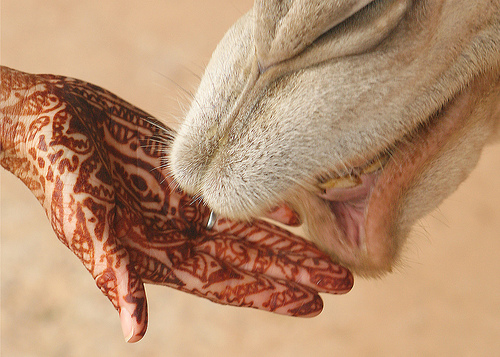
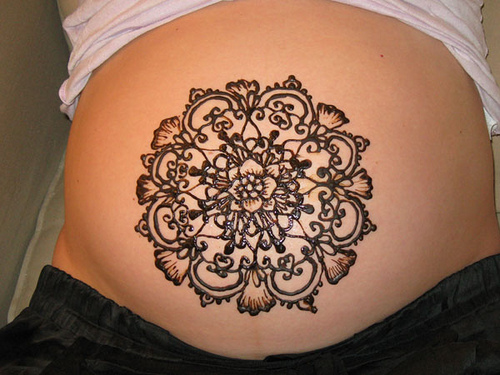
 The Ancient Magic of Henna Tattoos by Stephanie Dray The heroine of my novels, Cleopatra Selene, was the Queen of Mauretania and she ruled over the ancient Berbers, the descendants of whom still live in North Africa. For my first novel, Lily of the Nile, I researched the magic of ancient Egypt because I wanted to know the spiritual traditions with which Selene would have been familiar. But for Song of the Nile, I wanted to learn all I could about the life of the people who called Selene their queen. What I learned is that ancient Mauretania was every bit as exotic and sensual as Egypt, and that the women who lived there had a rich and colorful spirituality that expressed itself in their arts. We’ve all heard of Berber carpets. Perhaps we even own a piece of Berber jewelry. But the art of henna is largely associated with Indian culture now, even though it’s believed to have been of Berber origin. Henna is a plant that, when dried, crushed to a powder, and mixed with oil to form a paste, can safely dye the skin--and the color will remain for weeks. Because of this and other medicinal properties, henna became an important part of Berber culture. Like the Egyptians, the Berbers believed in a kind of sympathetic magic, whereby symbols could take the place and power of actual things. For example, whereas the Egyptians might carve a cobra or a jackal-headed god at the entrance of a tomb to guard it, the Berbers might paint a sharp object on a pregnant woman’s belly as if to pierce the evil eye. Whereas the Egyptians spent a great deal of time ornamenting tombs and creating magical amulets to be worn, the Berbers retreated to a more personal, more sensual connection to the supernatural world. By painting protective symbols on the body, the skin becomes its own talisman and magical protection. A manifestation of spirituality that is visible to anyone who might look upon the tattoos. It’s interesting to me that while I used bloody hieroglyphs on my heroine’s arms and hands as a way of the divine world speaking through her, I hadn’t considered the use of symbols on her arms and hands as a way for her to speak back. At least, not until I learned more about the Berbers among whom Selene built a new life for herself. While not exclusively reserved for women, Berber henna tattoos are inextricably entwined with women’s rituals. Henna tattoos are most often applied before a wedding, before and after birth, and before death. At all life’s thresholds, and, incidentally, all the times that a woman might need the comfort of others near her, rubbing her, pampering her, and seeing to it that she has adequate rest. The henna paste can be made with oils--sandalwood is a popular one--so that the long process of painting intricate designs on the skin can give aromatic pleasure to all those involved. Berber women couldn’t easily tattoo themselves, so it become a bonding experience, and one of giving over the body to others in trust. And if that’s not magic, what is?


More on Stephanie Dray...
Stephanie graduated from Smith, a small women’s college in Massachusetts where–to the consternation of her devoted professors–she was unable to master Latin. However, her focus on Middle Eastern Studies gave her a deeper understanding of the consequences of Egypt’s ancient clash with Rome, both in terms of the still-extant tensions between East and West as well as the worldwide decline of female-oriented religion.

Before she wrote novels, Stephanie was a lawyer, a game designer, and a teacher. Now she uses the transformative power of magic realism to illuminate the stories of women in history and inspire the young women of today. She remains fascinated by all things Roman or Egyptian and has–to the consternation of her devoted husband–collected a house full of cats and ancient artifacts.

"Sorceress. Seductress. Schemer. Cleopatra’s daughter has become the emperor’s most unlikely apprentice and the one woman who can destroy his empire… Having survived her perilous childhood as a royal captive of Rome, Selene pledged her loyalty to Augustus and swore she would become his very own Cleopatra. Now the young queen faces an uncertain destiny in a foreign land. Forced to marry a man of the emperor’s choosing, Selene will not allow her new husband to rule in her name. She quickly establishes herself as a capable leader in her own right and as a religious icon. Beginning the hard work of building a new nation, she wins the love of her new subjects and makes herself vital to Rome by bringing forth bountiful harvests. But it’s the magic of Isis flowing through her veins that makes her indispensable to the emperor. Against a backdrop of imperial politics and religious persecution, Cleopatra’s daughter beguiles her way to the very precipice of power. She has never forgotten her birthright, but will the price of her mother’s throne be more than she’s willing to pay"?

Berkley Trade in October 2011 (Trade Paperback)
# ISBN-10: 0425243044 and # ISBN-13: 9780425243046

Wednesday, June 29, 2011

Catherine Delors on The King and the Emperor and Bonus Giveaway!


Please welcome author Catherine Delors back to Historically Obsessed with a re-post of her event guest post for historical fiction bloggers round table event which was back in 2010. HFRT featured Catherine's hard copy release of "For the King" last year and I enjoyed this one greatly. I figured it would be appropriate and fun to re-post this very cool post on the correspondence between Louis XVIII and Napoleon with an exciting giveaway. Catherine's lovely novel "For the King" will be hitting stores on July 5th 2011. With out further delay please take it away Catherine.

The King and the Emperor: Louis XVIII and Napoléon
CATHERINE DELORS

My novel is called FOR THE KING for a reason (for several reasons, in fact, but I will leave it to the reader to discover those.)

In 1800 France was still a republic, nominally run by three Consuls. For all intents and purposes, only the First Consul, Napoléon Bonaparte, mattered. He had seized power in a bloodless coup in the fall of 1799.

At first, royalists indulged in the hope that Bonaparte would step down and restore the monarchy. The pretender to the throne was a younger brother of the late Louis XVI, Louis-Stanislas. He was now known to his followers as Louis XVIII, to allow for the theoretical reign of the young Louis XVII, son of Louis XVI and Marie-Antoinette, who had died jailed at the Temple.


Louis XVIII

In 1800 Louis XVIII was 45. He had been friendly to reform in the beginnings of the French Revolution. But as it took a more radical turn, he had fled at the same time as the royal couple. Only he had succeeded in reaching Brussels when Louis XVI and Marie-Antoinette were arrested near the border.

Since then, Louis XVIII had lived the unhappy life of an exile, at the mercy of the varying generosity of foreign sovereigns and the vagaries of international politics. In 1800 he was living under the protection of the Tsar of Russia.

Louis XVIII was by all accounts, like his elder brother, a man of superior intelligence, but he was a far more astute politician than Louis XVI. He was patient, ambitious, cunning, and determined to step some day unto the throne of his ancestors.

This is what he wrote Napoléon in September of 1800:

General,
You must have long known that you have earned my esteem. If you ever doubted that I was able of gratitude, chose your own place, decide the fate of your friends.
As for my principles, I am a Frenchman: merciful by nature, I shall be all the more so by reason.


No, the victor of Lodi, Castiglione, Arcole, le conqueror of Italy and Egypt cannot prefer a vain fame to glory. However you are wasting precious time; we can ensure the peace of France. I say “we” because I need Bonaparte for that, and that he cannot do it without me.


General, Europe is watching you, glory awaits you, and I am impatient to restore peace to my people.
Keep in mind that Bonaparte had not yet given any indications that he planned to restore monarchy for his own benefit. He would only crown himself Emperor four years later. But he obviously thought the time had come to dash royalist illusions. 

Here is his response to Louis XVIII:

Sir,
I received your letter. I thank you for the kind things you write about me. You must not wish for your return to France. You would have to step upon 500,000 corpses.


Sacrifice your interest to the peace and happiness of France; history will remember it to your credit.


I am not indifferent to your family’s misfortunes. I will be happy to contribute to the comfort and tranquility of your retreat.
Bonaparte

Bonaparte had dropped the mask! These letters, by the way, provide useful glimpses into the minds of the two men. Note how Louis XVIII flatters Bonaparte, and emphasizes cooperation, and how all but one of Bonaparte’s sentences begin with “I”.

 
Napoléon

A few months later, royalists will detonate a bomb along the path of Bonaparte’s carriage, in the assassination attempt I describe in FOR THE KING.
As to Louis XVIII, he had to bide his time. But eventually, he was restored to the throne, while Napoléon died in exile on the forlorn island of St. Helena. Twists and turns of history…

Thank you Catherine for dishing us this wonderfully delicious piece of correspondence between the two men. I do have to say though that the secret of the title was one of my favorite parts and my lips are sealed. If you want to know the FOR THE KING secret you will just have to read it.

For More on Catherine Delors FOR THE KING check this out:
For the King, Amazon
Catherine's Website

Lets kick off this killer giveaway! 
The giveaway is for two finished paperback copies so that mean two separate people will score a copy of "For the King". This one is only open to the US residents. Giveaway ends July 4th 2011 at midnight west coast time.

For 1 entry enter your name and email
For 2 entries be a follower and say so in the form
For 3 entries share this and add a real link.


~Lizzy~

Monday, May 02, 2011

BELOVED PILGRIM Author Nan Hawthorne on "Gay People in Historical Novels"

"Unwilling to settle for the passive life of a noblewoman, Elisabeth dons her late twin brother's armor and sets out for the Holy Land. On the journey she learns many things, not the least of which is that she can pass for a young man because, as she says, "People see what they expect to see." Her lessons also include that honor is not always where you expect to find it, and that true love can come in the form... of another woman". 

Please welcome the lovely author Nan Hawthorne to Historically Obsessed! Thank you Nan for coming and sharing with us some of the realities of gay releationships in historical fiction novels today. I am proud to have Nan here today to discuss this very relevant topic in historical fiction.With out further delay take it away Nan.

Gay People in Historical Novels 
With a widely accepted estimate that ten percent of men and women prefer their own sex for love and lovemaking and most likely always have, it can be difficult to find gay and lesbian characters in historical novels. This issue is important to me as the author of Beloved Pilgrim whose protagonist is a lesbian. Besides caring that a group of people who have almost no written history should at least be represented in historical fiction, I also worried whether there would be some barrier to my own novel’s acceptance by readers. I wondered about the instances of other gay characters and did some canvassing to find them in well-known novels.

Both my own novels have gay characters. Besides several, both women and men, in my just released Crusades-era novel, Beloved Pilgrim, there is both a villain and a heroic characters in An Involuntary King: A Tale of Anglo Saxon England(2008). I like to write about and read about gay people in history, plus with the prevalence of gay people in my extended family, I feel it is important to include that population in any effort to be inclusive. Some people may think that there were no practicing homosexuals in the past, such as the woman who was critical in her review of Brandy Purdy’s The Boleyn Wife who said that if there were so many gay people in the Tudor court they would all be executed. I don’t accept this for several reasons, not the least of which is common sense. But more on that another time. It is simply both important to me and to my liking to have gay people in my books.

I thought over some of the books I have read and also considered the portrayals of these gay characters. Candace Robb’s Owen Archer series starts with THE APOTHECARY ROSE with its predatory Summoner who murders his former lover, and I have wondered if a negative response to the characterization led to her development of the spy Martin Werther and his lover, the musician Ambrose, who are both complex and appealing and gain more support from Owen and Lucy than I even would have expected. Other historical mysteries include gay characters, such as Priscilla Royal’s Prioress Eleanor mysteries with the gay Brother Thomas, and I understand Jeri Westerson has a new gay character coming up in her Medieval Noirs.

Priscilla Royal, by the way, told me that she thinks the prevalence of romances in historical fiction may be the reason there are not so many gay characters in our novels. She points to Diane Galbadom’s novels and says, “For non-romance readers, however, gay characters are often welcome because they add a dimension to life in the era which isn't discussed much.”

There are of course historical figures who are believed to have been gay, perhaps most prominently Edward II of England and his lover, Piers Gaveston, about whom several novels have been written, including Purdy’s The Confession of Piers Gaveston , Susan Higginbotham’s The Traitor's Wife, and others. Richard the Lionhearted is portrayed as gay in novels like Norah Loft’s The Lute Player: A Novel of Richard the Lionhearted and Shield of Three Lions: A Novel by Pamela Kaufman, though Sharon Kay Penman has her well-reasoned doubts, but at least two novels about William Rufus, Valerie Anand’s King of the Wood and Parke Godwin’s Robin and the King portray that earlier king of England as gay. Philippa Gregory’s Earthly Joys has the horticulturalist John Tradescant in love with George Villiers who was himself generally believed to be in sexual relationships with James I and Charles I. Historical figures portrayed as gay also include Christopher Marlow, William Shakespeare, Byron and, of course, Oscar Wilde.

There are some societies that we know had a greater acceptance of sexual diversity, in particular the Ancient Greeks and Romans. Mary Renault’s Alexander the Great is only one of the novels that tell a gay love story. This is also where you will find lesbian characters, most notably the original Lesbian, Sappho, in Sappho Sings by Peggy Jay Ullman and others. There seem to be many fewer lesbians in other historical novels. Gregory’s The Wise Woman has the title character courted by the mistress of the house in which she lives. The web site Bosom Friends http://bosomfriends.wordpress.com, which I edit, has a list of lesbian historical novels.

The average reader is probably not aware of the whole industry of gay male or “M/M” novels, mostly romances. You can find more on this at Speak Its name http://www.speakitsname.com and The Macaronis http://historicromance.wordpress.com/. There are several such novels that take place in the Age of Sail, most prominent of which are books by Alex Beecraft, M. Kei and one by Mel Keegan. What might surprise you is that many of the male-named authors, like Alex, are actually women. There are lots of women readers of them as well. I plan my own M/M Civil War era novel for the near future. But there does not appear to be as much in the way of what one could call F/F historical fiction, though it is on the rise. I am currently reading The Warrior’s Path by Catherine M. Wilson and long ago read Isabel Miller’s Patience & Sarah about a couple who travel into the wilderness in America to carve out lives for themselves.

There are so many topics we could explore with this subject, such as why there is so little documentation of gays and lesbians in history, what life would have been like for people who sought their own gender for love, and, in another vein, why readers might or might not want to see gay characters in novels. If this last is a possibility, then I worry that the readers, like the woman who said “I’m not a lesbian, so I don’t read lesbian romance", will avoid a book like mine. Gay people don’t generally take that tack with straight novels but read for the story, and I would hope that straight readers would do so as well. As I said to the woman who doesn’t read lesbian romance, I’m not a lesbian and I wrote one! There is also the strong possibility that mainstream publishers would be chary of novels with strong gay themes. I hope to have the opportunity to explore these in other essays.

Stereotypes do come out in literature, including historical novels. I have found that people with disabilities and people who are fat are more likely to be negatively represented, and I would tend to assume the same might be true for gay and lesbian characters. One I have run into is tied to another, that gay characters were the victims of child sexual abuse or that gay men in particular seek out underage boys for sex.

I am making no pronouncements here but hoping to engender discussion. What gay and lesbian historical novels have you read? And what did you think of the portrayals both of the characters and their societies?

Nan Hawthorne is the author of Beloved Pilgrim, a novel about a woman who chooses to live and fight as a man in the doomed Crusade of 1101. It is available at Amazon and Smashwords, and should be on Kindle and Amazon.co.uk shortly.

Bio on Nan Hawthorn


Nan Hawthorne is a historical novelist who lives in the beautiful Pacific Northwest with her husband and doted-upon cats. She has been in love with history and historical fiction since, at four, she discovered the Richard Greene “The Adventures of Robin Hood” television series. She wrote her first short story at seven, then launched into the letters and stories with a teen friend that ultimately became her first novel, AN INVOLUNTARY KING: A TALE OF ANGLE SAXON ENGLAND (2008). The author of one nonfiction work on women and body image, she now concentrates primarily on historical novels set in the Middle Ages. Her latest novel, BELOVED PILGRIM, looks at gender identity and self-realization during the chaotic and doomed Crusade of 1101. She writes several blogs on historical themes, owns the medieval-novels.com catalog and also Internet radio station, Radio Dé Danann.

Amazon
Beloved Pilgrim An Involuntary King: A Tale of Anglo Saxon England
~Lizzy~

Friday, April 15, 2011

Finding Emile author Laurel Corona on "The Adventures of Meadowlark and Tom"

"Woman is born free, and everywhere she is in corsets. . . . 
Lili du Châtelet yearns to know more about her mother, the brilliant French mathematician Emilie. But the shrouded details of Emilie’s unconventional life—and her sudden death—are elusive. Caught between the confines of a convent upbringing and the intrigues of the Versailles court, Lili blossoms under the care of a Parisian salonnière as she absorbs the excitement of the Enlightenment, even as the scandalous shadow of her mother’s past haunts her and puts her on her own path of self-discovery.
Laurel Corona’s breathtaking new novel, set on the eve of the French Revolution, vividly illuminates the tensions of the times, and the dangerous dance between the need to conform and the desire to chart one’s own destiny and journey of the heart".

Please give a warm welcome to author Laurel Corona...


FINDING EMILIE

LAUREL CORONA


THE ADVENTURES OF MEADOWLARK AND TOM


Around a hundred pages into the first draft of FINDING EMILIE, I realized I had a dilemma. Although the two main characters, Lili and Delphine, aristocratic school girls in eighteenth-century Paris, were funny, imaginative, and full of life, when I envisioned the future I would have to write for them, I got depressed thinking about it.

It’s not just that they would have to wear corsets, panniers, and wigs a mile high, although that to me would be bad enough! It was more the expectations--absurdly high about things that don’t really matter, and humiliatingly low for those that do.

How draining it must have been for women to realize that the most valuable learning they were expected to master, other than church catechism, was the precise kind of nod appropriate for Monsieur So-and-so, and the exact depth and length of curtsey for the Countess of This-and-That. How dreary to accept that the frequent subject of gossip at court was some poor soul’s failure to be humorous, graceful, witty, charming in exactly the right measure at the moment.

“What have I gotten Lili and Delphine into?” I asked myself, but really I was wondering what I had ahead for myself. My novels are optimistic in tone and positive in sentiment, and the protagonists are psychologically healthy females who manage to thrive despite the limitations of their era. The focus is on the inner conflict that comes from having to figure out when to take a stand, where to choose to make life more difficult to have it be more fulfilling, how to find and be yourself when everything conspires to mold you into someone else. How was I going to keep sunshine in this novel as the situation grew more gloomy?

The answer came to me in a figment of Lili’s imagination, a scrappy little girl named Meadowlark. A lover of fairy tales, early in the novel, Lili tries writing a story herself, but what comes out is not an imperiled princess, but an alter-ego, a little girl who escapes her dreary life on a magic horse named Comète and meets an adventurous boy named Tom, with whom she roams earth and the heavens in search of adventure.

These stories became a way for Lili to explore her fears and frustrations. She may not know that’s what she’s doing, but the reader will. As Lili matures, her stories become more pointed and less swashbuckling, until by the end she is writing mature satire in the vein of Gulliver’s Travels and Candide.

And what better way to acknowledge that Lili’s era is when social satire first emerged as a powerful literary form, taking on the serious issues of the day with delicious humor? What better way to pay tribute to Voltaire, Emilie du Chatelet’s real-life soul mate?
Meadowlark becomes a means for Lili to comprehend her world and preserve her sense of self as she navigates the court at Versailles and faces the future of a loveless marriage and a life that will squeeze her more mercilessly than a stomacher or corset. The stories give her a chance to breathe, to give voice to herself.

And I think they’re hilarious! In Kiev we learn about the Court of Good Choices, in China we see a man make the social gaffe of writing a poem to the woman he loves, in rural France we watch a girl get her brains scrambled so she can become a good wife, in Uruguay, we meet a rich family tied up in golden chains to prove they don’t have to work for a living, and in the Brazilian rainforest, we witness some pointed realizations about happiness.

The tales of Meadowlark and Tom are an important part of Lili’s story, so I was disappointed when the editor expressed concern that they took the reader away from the main narrative. Since the reader is temporarily distracted by the vignettes from the life of Emilie du Chatelet, Lili’s dead mother, which appear between chapters, and by a smattering of letters that tell part of the story, the editor felt that one more diversion was too much. The decision we reached was to use only snippets from the Meadowlark tales in the novel and then present the complete versions as a separate little book bound in at the end.

I’m not the best judge of whether this worked. So many things require fresh eyes, which of course I don’t have. In the author’s note at the beginning, I tell readers what’s going on, but I have a feeling people won’t go to the end and read the stories as Lili writes them (this would be best), and may not know the stories are there at all until they get to the end. I don’t know what the experience of reading them all as a group will be, but it isn’t what I intended. But things are what they are, and I am hopeful these stories will both complement the novel, and perhaps have a life of their own someday. I’d really like to jump back on Comète and continue to see the world through Meadowlark’s eyes!


I am down to the wire on "Finding Emilie" and will just have to wait and see how it plays out for me in the end. Thank you Laurel for getting us up to speed on Meadow Lark and Tom's portion of the novel.

For more on Laurel,
Her Website
Her FB
Twitter
RSS Feed

Amazon
Finding EmiliePenelope's Daughter
footer sig

Wednesday, April 13, 2011

"Historically Obsessed with Roman Food" by Kate Quinn author of Daughters of Rome and Mistress of Rome

"A.D. 69. The Roman Empire is up for the taking. The Year of Four Emperors will change everything-especially the lives of two sisters with a very personal stake in the outcome. Elegant and ambitious, Cornelia embodies the essence of the perfect Roman wife. She lives to one day see her loyal husband as Emperor. Her sister Marcella is more aloof, content to witness history rather than make it. But when a bloody coup turns their world upside-down, both women must maneuver carefully just to stay alive. As Cornelia tries to pick up the pieces of her shattered dreams, Marcella discovers a hidden talent for influencing the most powerful men in Rome. In the end, though, there can only be one Emperor...and one Empress".

Please welcome back to Historically Obsessed author Kate Quinn. Her previous release "Mistress of Rome" released last year and on April 5th "Daughters of Rome" hit book stores everywhere.  Kate visited last year for Mistress of Rome with "Historically Obsessed with fashion". Now lets see what Kate has in store for us this time.
Historically Obsessed with Roman Food

Obsessed with Roman food? Scratch that – while writing my historical fiction novel Daughters of Rome, I was obsessed with any food, because I wasn't getting any. I was on a diet while writing the second half of the book, and it was a form of torture I wouldn't wish on my worst enemy.

Historical fiction novelists already have a hard time with diets because delicious food is constantly cropping up in the books we write. Set a book in the Middle Ages and soon you're drooling over sugar subtleties and spit-roasted boar. Writing about the Restoration period? Prepare to go on a Ben & Jerry's binge after detailing all the newly invented ice creams Charles II and his various mistresses went wild over. Or you could be very unlucky, like me, and write about ancient Rome: probably the most gastronomically inventive culture the world has ever produced. As if that weren't bad enough, Daughters of Rome happens to take place during the Year of Four Emperors – and the third of those four emperors was Vitellius, a walking stomach who was only on the throne about six months but spent most of that time eating literally the best food in the world.

It was torture. I choked down my dry crackers and calorie-free miso soup as my heroines dined on roast sparrows in spicy egg sauce and sausages with damsons and pomegranate seeds. I gave up dessert, but my heroines went to Imperial banquets and ate jellied roses in pastry. And wine – everyone in my book swilled goblet after filigreed silver goblet of wine (Romans drank little else) while I sipped grimly at my diet green tea.

Of course, not everything about Roman cuisine would please a 21st century eye. I for one am glad never to have been served an entire elephant trunk at a party. And when I read about one particularly famous Roman dish where a live fish was brought to the table still alive so the guests could watch it turn a pretty color as it died in a pool of lamprey milk sauce – all I could think was that I prefer my food to be dead by the time it reaches my plate, thank you. And if you're wondering how anybody managed to eat all those dishes at a 100 course banquet . . . well, legendary gourmets like Emperor Vitellius made use of a little room called a vomitorium after fifty courses or so, returned with an empty stomach, and kept right on eating through another fifty courses. (Bulimia: the Roman way.)

Still, Roman banquets were usually pleasant things, and you could do worse than to try hosting one the next time you're in an ambitious mood. Be sure to invite between three and nine guests (no less than the Three Graces, no more than the Nine Muses, according to a contemporary of Cicero in his instructions for the perfect dinner party), and seat everyone on a horseshoe arrangement of couches so they can recline on the left elbow while eating. You must provide entertainment, and remember that Greek orators are always appropriate and naked dancing girls always tacky. And here's a sample menu for your pre-dinner shopping trip:

FIRST COURSE
Jellyfish and eggs
Boiled tree fungi with peppered fish-fat sauce
Sow's udders stuffed with milk and eggs
Sea urchins in spiced oil

MAIN COURSE
Ham boiled with figs and bay leaves, rubbed with honey and baked in a pastry crust
Dormice stuffed with pork and pine nuts
Flamingo boiled with dates
Roast parrot
Boiled ostrich with sweet sauce
Fallow deer roasted with onion sauce, Jericho dates, raisins, oil, and honey
Turtledove boiled in its feathers

DESSERT
Hot African sweet-wine cakes with honey
Fricassee of roses with pastry
Dates stuffed with pine nuts and fried in honey

One more thing: can you please invite me to your Roman banquet? My diet of green tea and miso soup has for the most part paid off (despite a leetle lapse with a Roman-style oyster ragout) and I have now been cleared to eat all the stuffed dormice I want.

Lizzy, thanks for having me back this year! It’s been a pleasure.

Thank you Kate for the very enticing post. I could not imagine eating so many different things in one meal. Giveaway! Up for grabs is one brand new copy of Daughters of Rome by Kate Quinn. Open to US and Canada only. The ONLY rule is you MUST fill out the form below.


footer sig